




 Cosmetic
What actually happens during a 3D intraoral scan

In short
- An intraoral scanner is a small camera wand that builds a 3D model of your teeth from thousands of images.
- It uses light, not X-rays, so there is no radiation, and a full scan takes a few minutes.
- We use the model for aligners, crowns, implants and to track changes between check-ups.
If you had braces or a crown made ten or more years ago, you probably remember the impression tray: a U-shaped tray filled with cold putty, pressed onto your teeth and held there while it set. Most people disliked it, and plenty of people gagged. At Aveline we have not taken a routine putty impression in years. Instead, we use a 3D intraoral scan. Here is what actually happens when we do one.
What an intraoral scanner is
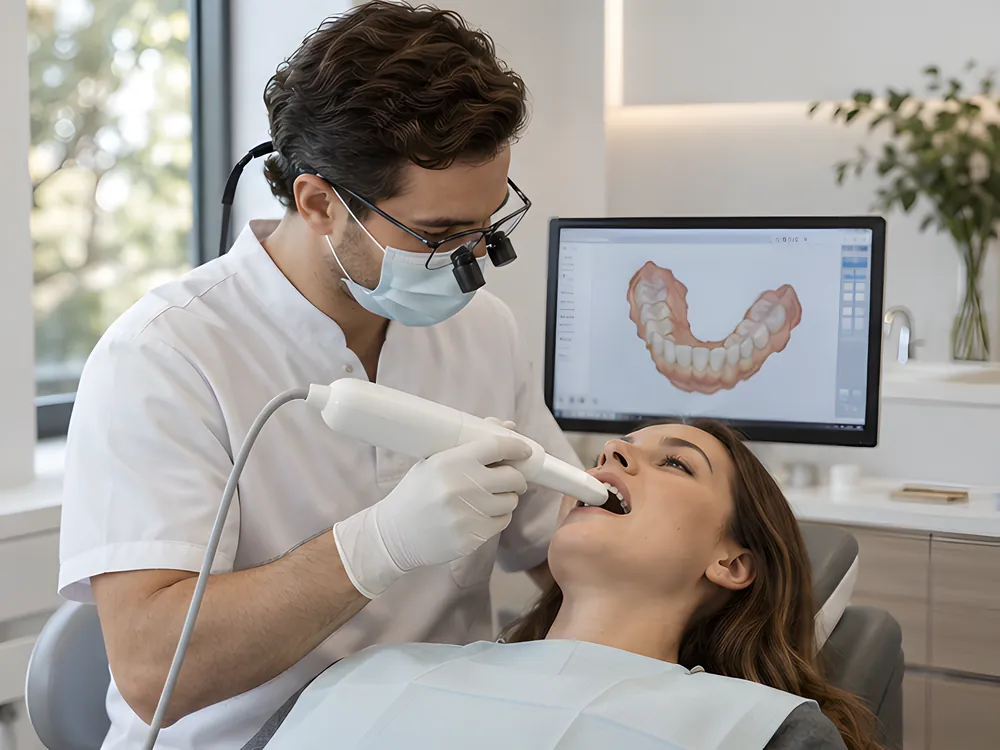
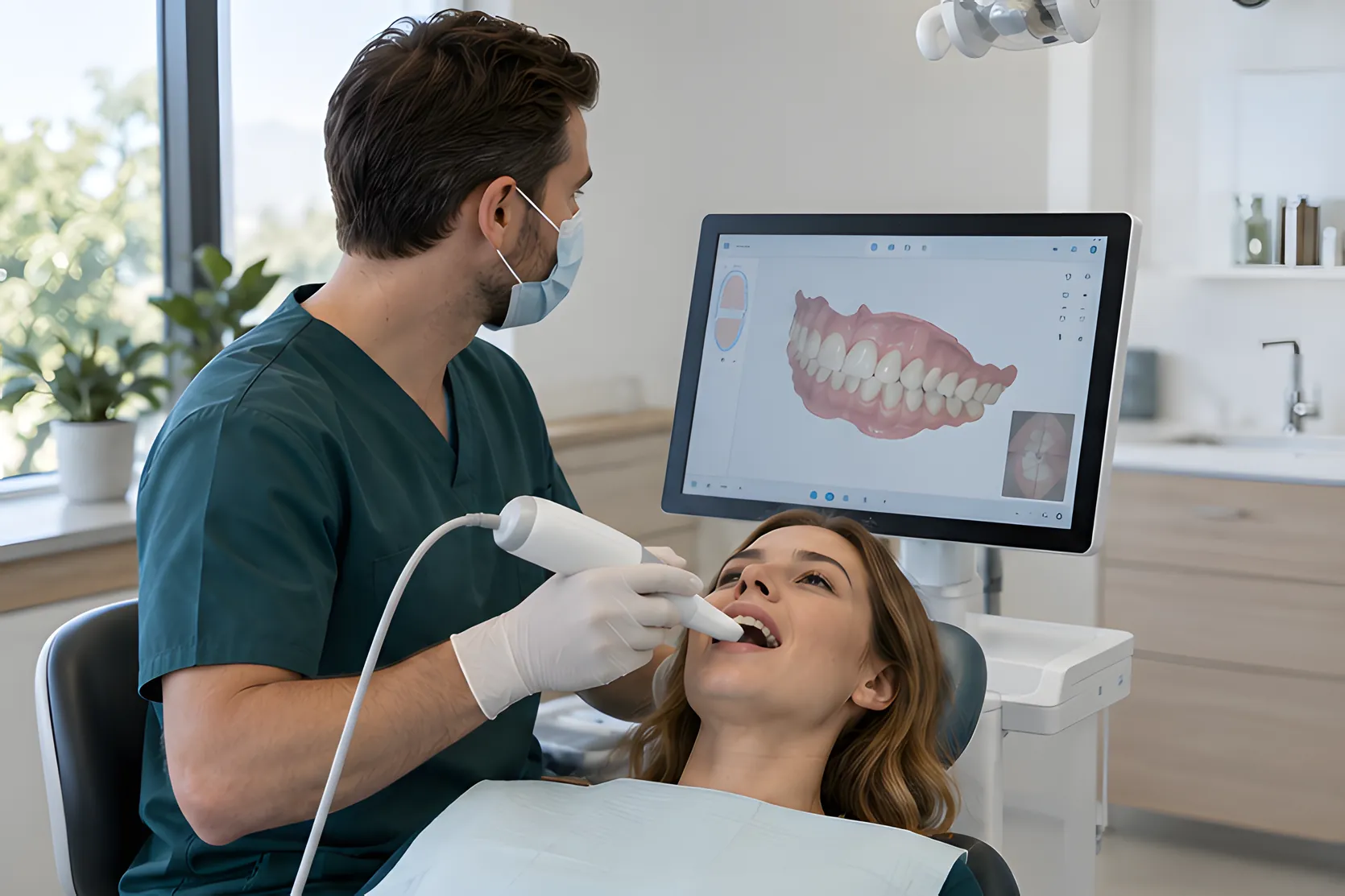
The scanner is a wand about the size of an electric toothbrush, connected to a screen. Its tip holds a tiny camera and a light source. As the wand moves over your teeth it captures thousands of overlapping images every second, and software stitches them together into a full-colour 3D model of your teeth and gums.
Because the scanner works with visible light, there is no radiation involved. It is closer to taking a very fast series of photographs than to an X-ray. That also means it only records surfaces: it shows the shape and position of your teeth and gums, not what is happening inside a tooth or in the bone. For that we still use low-dose digital X-rays when they are due.
What happens, step by step
- A quick dry. Saliva reflects light and blurs the image, so we gently dry your teeth with a little air as we go.
- The upper teeth. The wand travels along the biting surfaces, then the cheek side, then the tongue side. You can breathe and swallow normally.
- The lower teeth. The same path along the lower arch.
- Your bite. You close together naturally for a few seconds while we scan the side of your teeth, so the software knows how the two arches meet.
- A check on screen. We rotate the model to make sure nothing is missing. If a small area is unclear, we rescan just that spot.
A full scan usually takes between three and five minutes. You can ask us to pause at any time, and there is nothing to bite into or hold in place.
Why we switched from impressions
Comfort was the obvious reason, but not the only one. Putty impressions can tear, distort as they set or pick up air bubbles, and a flawed impression often only shows up days later when a crown or aligner does not fit. A scan is checked on screen while you are still in the chair, so problems are fixed in seconds rather than at another appointment.
The digital model also travels instantly. For clear aligners, it goes straight into the planning software. For same-day ceramic crowns, it is used to design and mill the crown in the studio while you wait.
What we do with your scan
Your first scan becomes a baseline record. At later check-ups we can overlay a new scan on the old one and see changes that are hard to spot by eye: gradual wear from grinding, gum recession, or teeth that have drifted since orthodontic treatment. Measuring those changes early often means the fix is a night guard or a better brushing technique rather than restorative work.
We also use the model to explain things. It is much easier to understand why a tooth needs attention when you can rotate it on screen and see the crack or the worn edge for yourself.
Common questions
Is it safe during pregnancy? Yes. The scan uses light only. We still ask about pregnancy before any X-rays, but the scan itself carries no radiation.
What if I have a strong gag reflex? Most people who struggle with impression trays are fine with a scan, because the wand is small and moves steadily. Tell us beforehand and we will take it in short sections with breaks.
Do I pay extra for it? No. A 3D scan is part of our digital diagnostics, which are included with every check-up.
If you are due a check-up, or you are curious about aligners and want to see a simulation of your own teeth, the scan is where it starts. It takes a few minutes and you will see the result straight away.
Dr. Daniel Costa
Daniel has straightened more than 1,400 smiles with clear aligners and fixed braces. He is known for realistic timelines and very few surprise extra stages.
Full profile