




 Technology
Professional whitening versus strips: an honest comparison

In short
- Strips and professional whitening both use peroxide. The differences are strength, fit and supervision.
- Strips can work well on straight teeth with mild surface staining, but results are often uneven.
- Neither option changes the colour of crowns, veneers or fillings, so check those first.
Patients often ask me whether they should pay for professional whitening when a box of strips costs a fraction of the price. It is a fair question, and the honest answer is: it depends on your teeth and what you want from the result. Both approaches rely on the same basic chemistry. What differs is how much of it reaches your teeth, how evenly, and how safely.
How whitening works
Tooth colour comes from two layers. Enamel on the outside is semi-translucent; dentine underneath is naturally more yellow. Over time, pigments from coffee, tea, red wine and tobacco settle into the enamel and dentine, and teeth gradually look darker.
Whitening products use hydrogen peroxide, or carbamide peroxide, which breaks down into hydrogen peroxide in the mouth. Peroxide passes through the enamel and breaks the stain molecules into smaller, less coloured pieces. It does not remove or bleach away enamel; the structure of the tooth stays the same. What changes is how much light those stains absorb.
The strength of the peroxide and the time it spends in contact with your teeth largely decide how fast and how far the colour changes.
What strips do well, and where they fall short
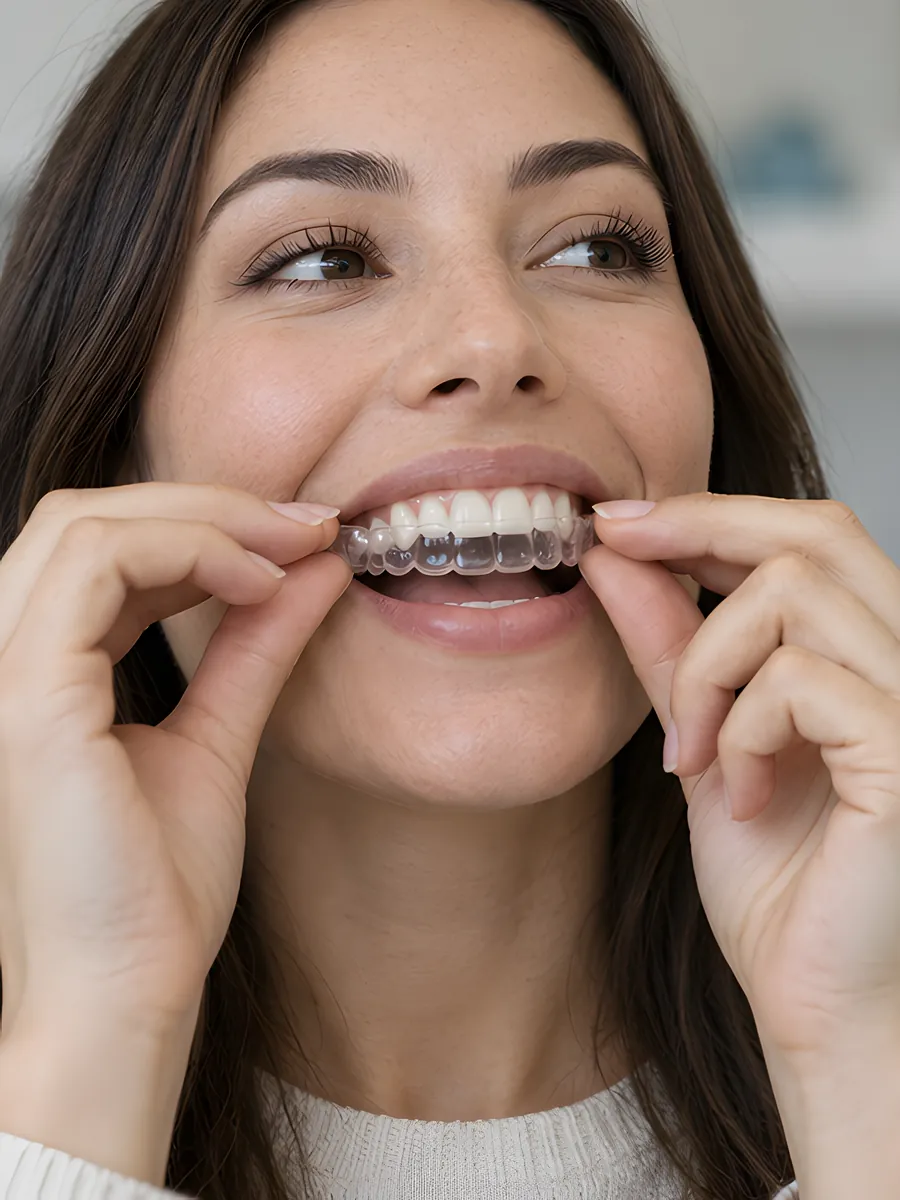
Whitening strips are thin, flexible films coated with a low-concentration peroxide gel. You press them onto the front surfaces of your teeth and leave them for a set time, usually daily for one to two weeks.
On straight teeth with mild, even staining, strips can give a pleasing result, and for some people that is all they need. The limitations tend to show up in three places:
- Coverage. A flat strip does not follow the curves of crowded or overlapping teeth, so gel misses the edges and the spaces between teeth. The result can look patchy, with lighter centres and darker margins.
- Reach. Strips mostly cover the front six to eight teeth. If you have a broad smile, the teeth further back can end up a visibly different shade.
- Gums. Gel that slides onto the gums can cause irritation, and without an examination first, whitening can sting badly on exposed roots or small cavities.
What professional whitening adds
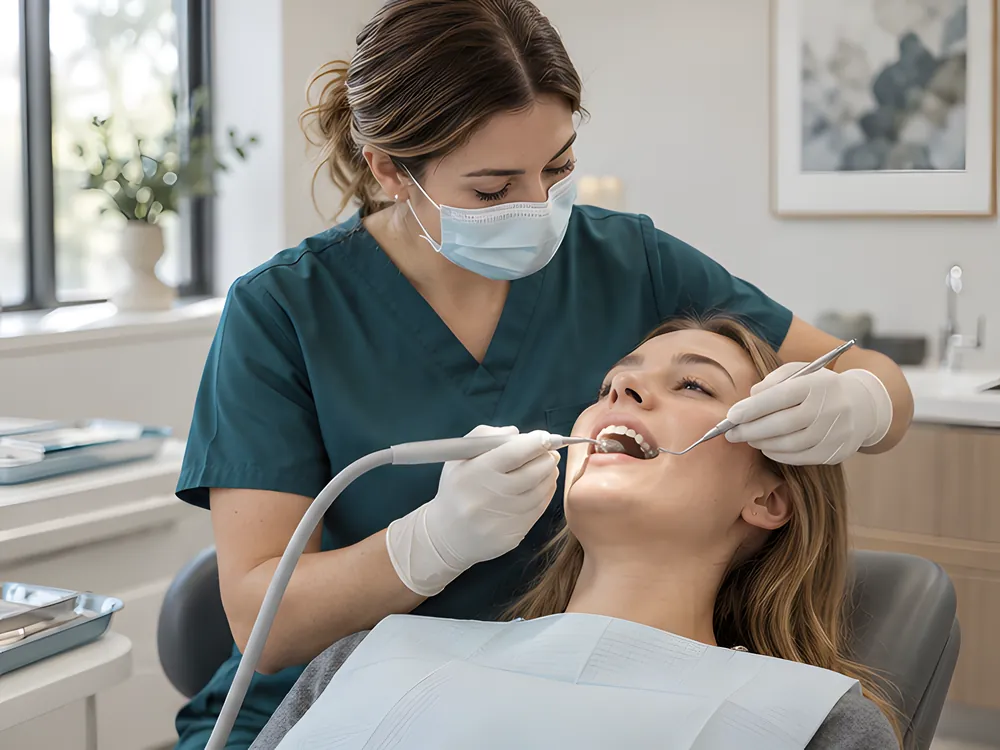
In the studio we use a considerably stronger gel, which is only safe because the gums are protected with a barrier first and a dentist is watching throughout. Stronger gel for a controlled time means a clear change in a single appointment, and we can adjust or stop if you feel sensitivity.
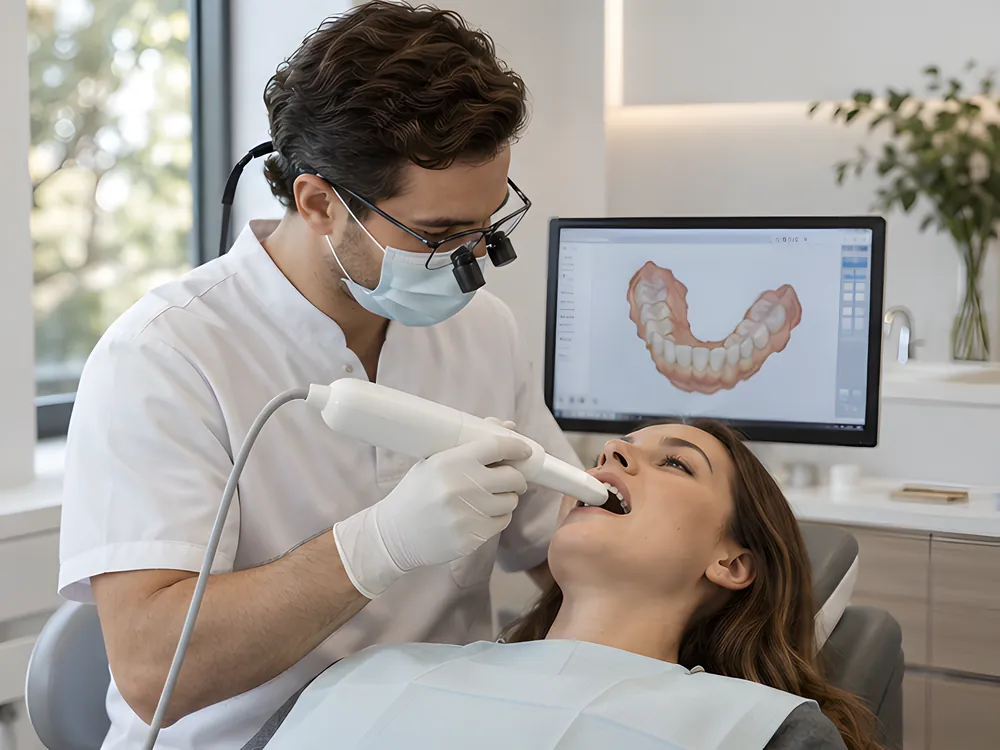
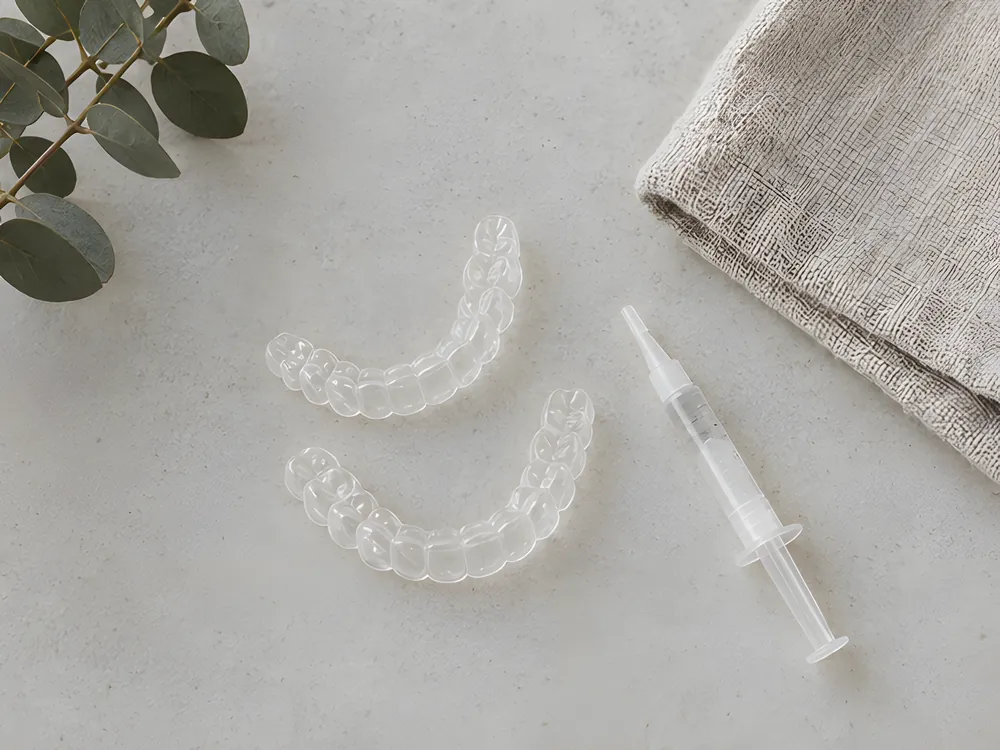
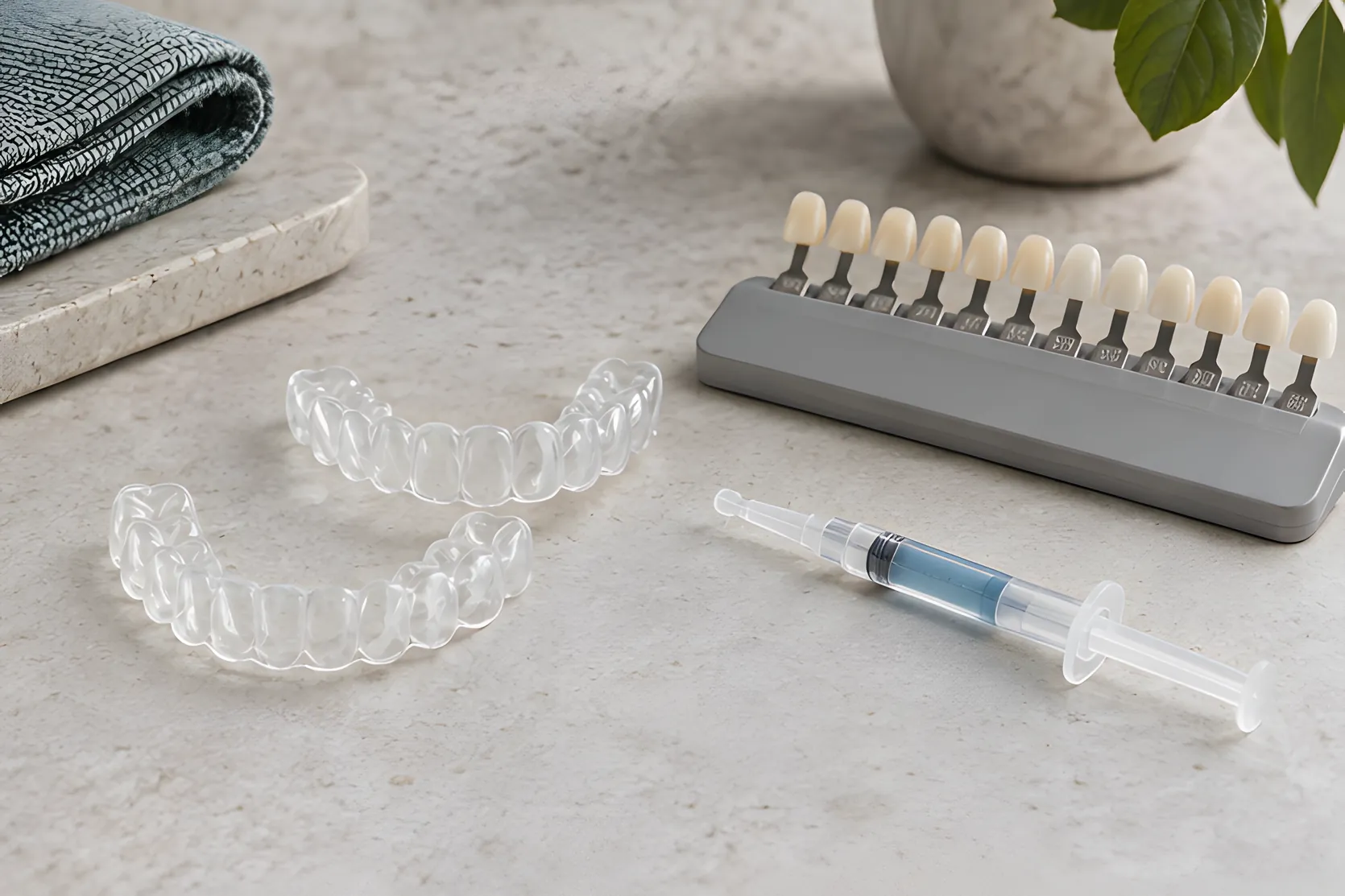
We then take a 3D scan and make custom trays that fit your teeth exactly, including the edges and the gaps. With a lower-strength gel at home, those trays let you top up the result evenly over the following months.
The step people most often overlook is the check beforehand. We look for decay, cracks, gum recession and old fillings, all of which change what whitening can do and how comfortable it will be.
Side by side
| Whitening strips | Professional whitening | |
|---|---|---|
| Peroxide strength | Low | High in the studio, low in custom trays |
| Time to a visible change | One to two weeks | One appointment |
| Fit on crowded teeth | Often patchy | Even, trays follow every edge |
| Sensitivity control | Stop and start yourself | Adjusted by your dentist |
| Check-up first | No | Yes |
What neither option can do
Whitening only works on natural tooth structure. Crowns, veneers, bonding and tooth-coloured fillings keep the colour they were made in, so if you have any on your front teeth they will stand out once the teeth around them get lighter. We often plan whitening first and then replace a front filling to match.
Some stains also respond poorly. Grey discolouration from certain antibiotics taken in childhood, or a single tooth that darkened after an injury, may need a different approach such as internal whitening, bonding or a veneer.
Sensitivity is common with any peroxide product and usually settles within a day or two. A toothpaste for sensitive teeth, used for a week before and after, helps a great deal. Whitening is not recommended during pregnancy or while breastfeeding.
My advice
If your teeth are straight, healthy and only mildly stained, strips are a reasonable place to start. Follow the instructions, do not leave them on longer than directed and stop if your gums become sore.
If your teeth are crowded, you have restorations at the front, you have had sensitivity before or you want a noticeable change in one visit, professional whitening is the more predictable choice. Either way, have a check-up first. Whitening over an untreated cavity is uncomfortable, and it is much better to find out before you start.
Dr. Elena Varga
Elena leads our cosmetic work, from whitening to full veneer cases. She plans every smile digitally first, so you can see the result before a single tooth is touched.
Full profile