





In short
- An intraoral scanner is a small camera wand that builds a 3D model of your teeth from thousands of images.
- It uses light, not X-rays, so there is no radiation, and a full scan takes a few minutes.
- We use the model for aligners, crowns, implants and to track changes between check-ups.
If you had braces or a crown made ten or more years ago, you probably remember the impression tray: a U-shaped tray filled with cold putty, pressed onto your teeth and held there while it set. Most people disliked it, and plenty of people gagged. At Aveline we have not taken a routine putty impression in years. Instead, we use a 3D intraoral scan. Here is what actually happens when we do one.
What an intraoral scanner is
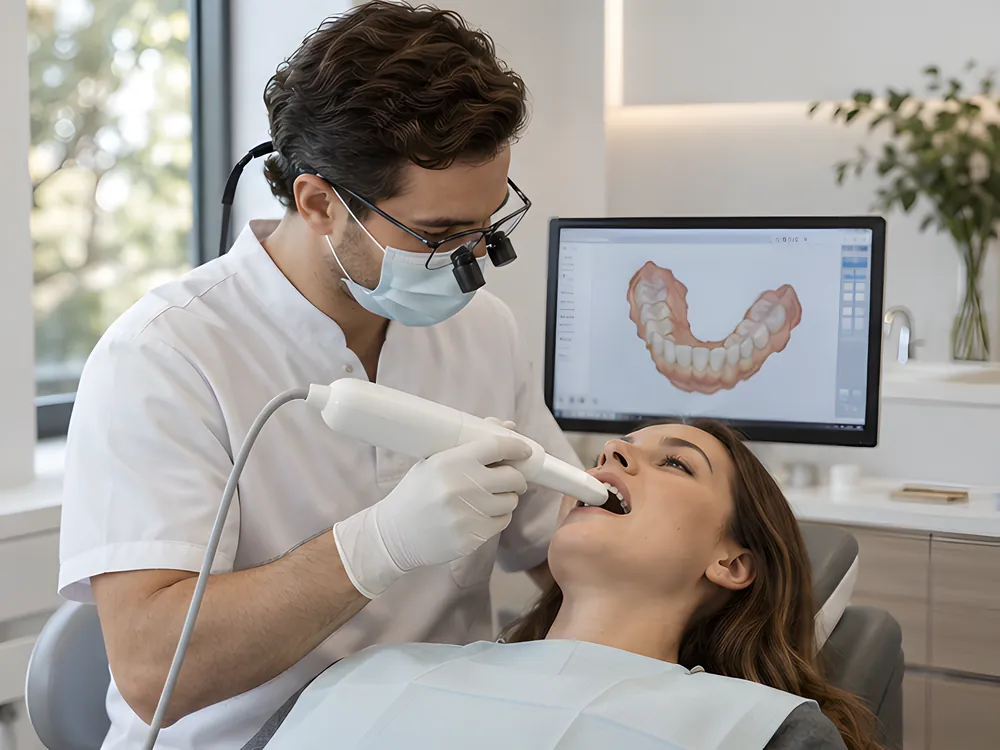
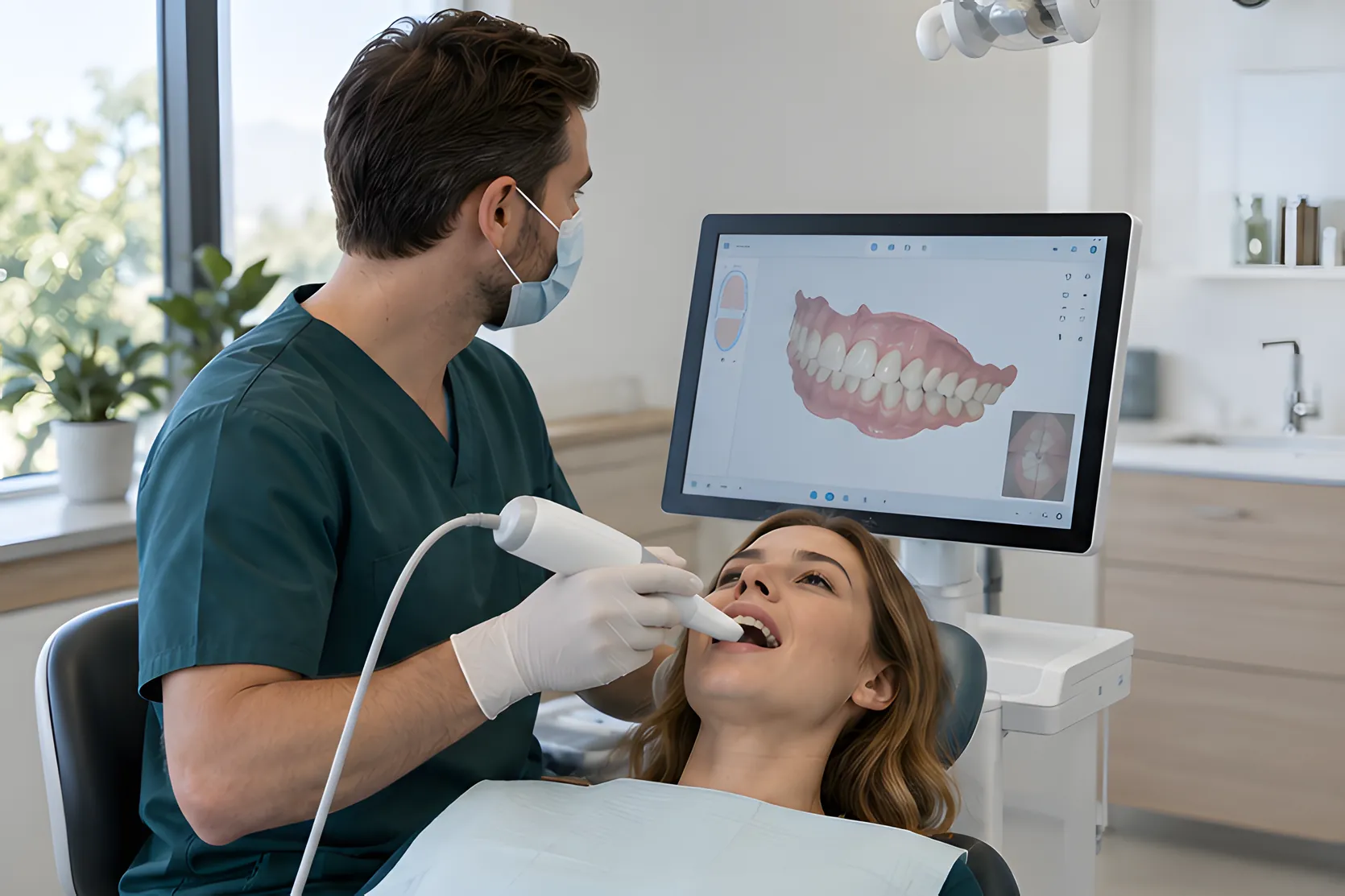
The scanner is a wand about the size of an electric toothbrush, connected to a screen. Its tip holds a tiny camera and a light source. As the wand moves over your teeth it captures thousands of overlapping images every second, and software stitches them together into a full-colour 3D model of your teeth and gums.
Because the scanner works with visible light, there is no radiation involved. It is closer to taking a very fast series of photographs than to an X-ray. That also means it only records surfaces: it shows the shape and position of your teeth and gums, not what is happening inside a tooth or in the bone. For that we still use low-dose digital X-rays when they are due.
What happens, step by step
- A quick dry. Saliva reflects light and blurs the image, so we gently dry your teeth with a little air as we go.
- The upper teeth. The wand travels along the biting surfaces, then the cheek side, then the tongue side. You can breathe and swallow normally.
- The lower teeth. The same path along the lower arch.
- Your bite. You close together naturally for a few seconds while we scan the side of your teeth, so the software knows how the two arches meet.
- A check on screen. We rotate the model to make sure nothing is missing. If a small area is unclear, we rescan just that spot.
A full scan usually takes between three and five minutes. You can ask us to pause at any time, and there is nothing to bite into or hold in place.
Why we switched from impressions
Comfort was the obvious reason, but not the only one. Putty impressions can tear, distort as they set or pick up air bubbles, and a flawed impression often only shows up days later when a crown or aligner does not fit. A scan is checked on screen while you are still in the chair, so problems are fixed in seconds rather than at another appointment.
The digital model also travels instantly. For clear aligners, it goes straight into the planning software. For same-day ceramic crowns, it is used to design and mill the crown in the studio while you wait.
What we do with your scan
Your first scan becomes a baseline record. At later check-ups we can overlay a new scan on the old one and see changes that are hard to spot by eye: gradual wear from grinding, gum recession, or teeth that have drifted since orthodontic treatment. Measuring those changes early often means the fix is a night guard or a better brushing technique rather than restorative work.
We also use the model to explain things. It is much easier to understand why a tooth needs attention when you can rotate it on screen and see the crack or the worn edge for yourself.
Common questions
Is it safe during pregnancy? Yes. The scan uses light only. We still ask about pregnancy before any X-rays, but the scan itself carries no radiation.
What if I have a strong gag reflex? Most people who struggle with impression trays are fine with a scan, because the wand is small and moves steadily. Tell us beforehand and we will take it in short sections with breaks.
Do I pay extra for it? No. A 3D scan is part of our digital diagnostics, which are included with every check-up.
If you are due a check-up, or you are curious about aligners and want to see a simulation of your own teeth, the scan is where it starts. It takes a few minutes and you will see the result straight away.
In short
- Strips and professional whitening both use peroxide. The differences are strength, fit and supervision.
- Strips can work well on straight teeth with mild surface staining, but results are often uneven.
- Neither option changes the colour of crowns, veneers or fillings, so check those first.
Patients often ask me whether they should pay for professional whitening when a box of strips costs a fraction of the price. It is a fair question, and the honest answer is: it depends on your teeth and what you want from the result. Both approaches rely on the same basic chemistry. What differs is how much of it reaches your teeth, how evenly, and how safely.
How whitening works
Tooth colour comes from two layers. Enamel on the outside is semi-translucent; dentine underneath is naturally more yellow. Over time, pigments from coffee, tea, red wine and tobacco settle into the enamel and dentine, and teeth gradually look darker.
Whitening products use hydrogen peroxide, or carbamide peroxide, which breaks down into hydrogen peroxide in the mouth. Peroxide passes through the enamel and breaks the stain molecules into smaller, less coloured pieces. It does not remove or bleach away enamel; the structure of the tooth stays the same. What changes is how much light those stains absorb.
The strength of the peroxide and the time it spends in contact with your teeth largely decide how fast and how far the colour changes.
What strips do well, and where they fall short
Whitening strips are thin, flexible films coated with a low-concentration peroxide gel. You press them onto the front surfaces of your teeth and leave them for a set time, usually daily for one to two weeks.
On straight teeth with mild, even staining, strips can give a pleasing result, and for some people that is all they need. The limitations tend to show up in three places:
- Coverage. A flat strip does not follow the curves of crowded or overlapping teeth, so gel misses the edges and the spaces between teeth. The result can look patchy, with lighter centres and darker margins.
- Reach. Strips mostly cover the front six to eight teeth. If you have a broad smile, the teeth further back can end up a visibly different shade.
- Gums. Gel that slides onto the gums can cause irritation, and without an examination first, whitening can sting badly on exposed roots or small cavities.
What professional whitening adds
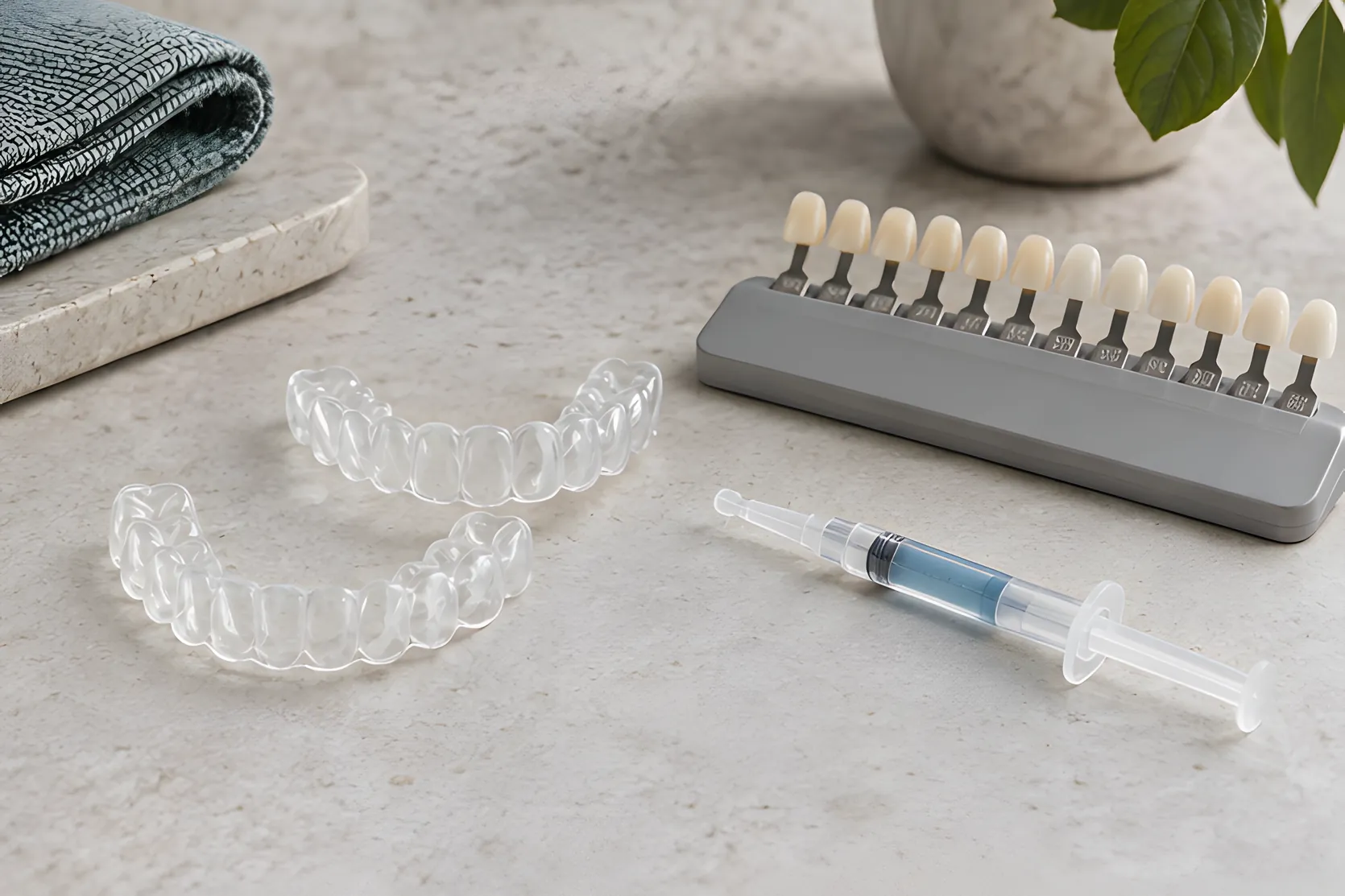
In the studio we use a considerably stronger gel, which is only safe because the gums are protected with a barrier first and a dentist is watching throughout. Stronger gel for a controlled time means a clear change in a single appointment, and we can adjust or stop if you feel sensitivity.
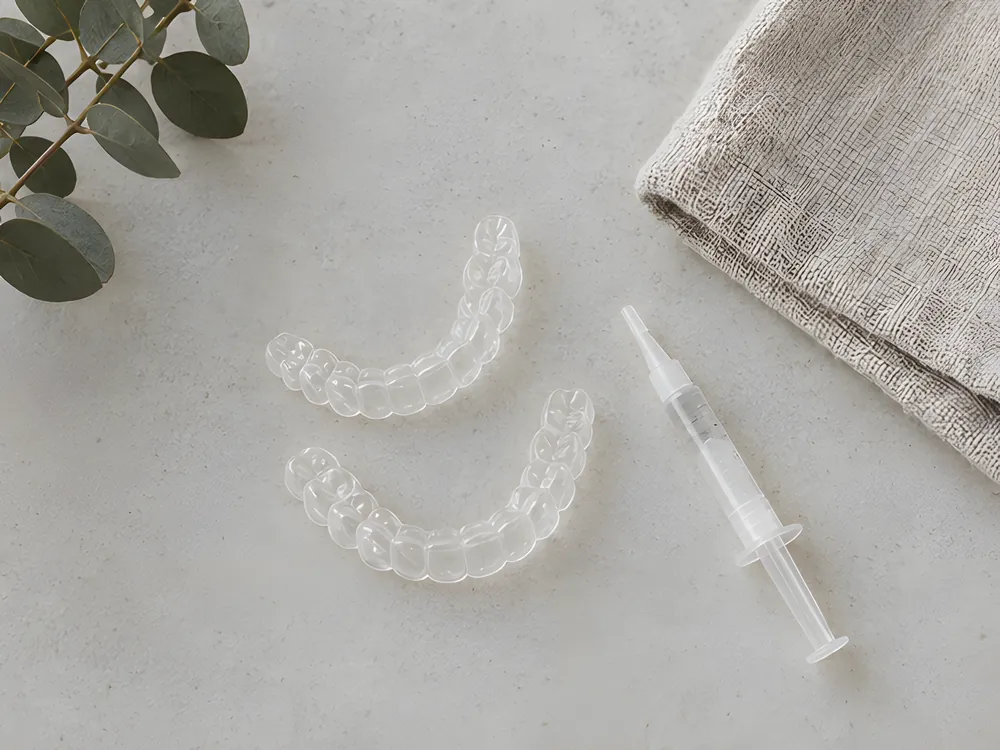
We then take a 3D scan and make custom trays that fit your teeth exactly, including the edges and the gaps. With a lower-strength gel at home, those trays let you top up the result evenly over the following months.
The step people most often overlook is the check beforehand. We look for decay, cracks, gum recession and old fillings, all of which change what whitening can do and how comfortable it will be.
Side by side
| Whitening strips | Professional whitening | |
|---|---|---|
| Peroxide strength | Low | High in the studio, low in custom trays |
| Time to a visible change | One to two weeks | One appointment |
| Fit on crowded teeth | Often patchy | Even, trays follow every edge |
| Sensitivity control | Stop and start yourself | Adjusted by your dentist |
| Check-up first | No | Yes |
What neither option can do
Whitening only works on natural tooth structure. Crowns, veneers, bonding and tooth-coloured fillings keep the colour they were made in, so if you have any on your front teeth they will stand out once the teeth around them get lighter. We often plan whitening first and then replace a front filling to match.
Some stains also respond poorly. Grey discolouration from certain antibiotics taken in childhood, or a single tooth that darkened after an injury, may need a different approach such as internal whitening, bonding or a veneer.
Sensitivity is common with any peroxide product and usually settles within a day or two. A toothpaste for sensitive teeth, used for a week before and after, helps a great deal. Whitening is not recommended during pregnancy or while breastfeeding.
My advice
If your teeth are straight, healthy and only mildly stained, strips are a reasonable place to start. Follow the instructions, do not leave them on longer than directed and stop if your gums become sore.
If your teeth are crowded, you have restorations at the front, you have had sensitivity before or you want a noticeable change in one visit, professional whitening is the more predictable choice. Either way, have a check-up first. Whitening over an untreated cavity is uncomfortable, and it is much better to find out before you start.
In short
- Bleeding gums are not normal. They are usually the first sign of gum inflammation.
- Hardened tartar cannot be brushed away at home; it needs a professional clean.
- Most people need a hygiene visit every six months, some more often.
Gum disease is one of the most common reasons adults lose teeth, and in its early stages it is almost always painless. That is exactly why it gets missed. As a hygienist, I spend a lot of my day with patients who wish they had come in sooner. These are the five signs I would never ignore.
1. Your gums bleed when you brush or floss
Many people think a little pink in the sink is normal. It is not. Healthy gums do not bleed with ordinary brushing. Bleeding usually means plaque has been sitting along the gumline long enough to cause inflammation, known as gingivitis.
The good news is that gingivitis is reversible. A professional clean removes the build-up, and with good brushing and daily cleaning between the teeth, gums typically settle within a couple of weeks. Left alone, it can progress to periodontitis, where the support around the teeth starts to break down. That damage cannot be fully reversed.
2. Bad breath that does not go away
Everyone has morning breath. Breath that stays unpleasant through the day, even after brushing, often comes from bacteria living in plaque and tartar around the gums, between the teeth or on the tongue. A thorough clean, plus advice on cleaning between teeth and your tongue, solves most cases. If it persists, we look for other causes such as a dry mouth, an old filling that traps food or a problem outside the mouth that needs your doctor.
3. Tartar you can see or feel
Plaque that is not removed hardens into tartar, also called calculus, within days. You may notice a rough, yellowish or brown line along the gumline, most often behind the lower front teeth where the saliva glands are. Once it has hardened, a toothbrush cannot remove it. Tartar gives plaque a rough surface to cling to and keeps the gums inflamed, so it needs to be removed with professional instruments.
4. Sensitive teeth or gums that look longer
If cold drinks suddenly make you wince, or your teeth look longer than they used to, your gums may be receding and exposing the root surface. Causes include gum disease, brushing too hard and grinding. Sensitivity can also point to a cavity or a cracked filling. None of these fix themselves, and all of them are easier to manage when they are caught early.
5. It has been more than six months
Sometimes the clearest sign is simply the calendar. For most adults we recommend a hygiene visit every six months. Some people benefit from coming more often, every three or four months, including those with a history of gum disease, diabetes, a dry mouth from medication, and people who smoke. Pregnancy can also make gums more prone to bleeding, so an extra visit is often worthwhile.
What happens at a hygiene visit
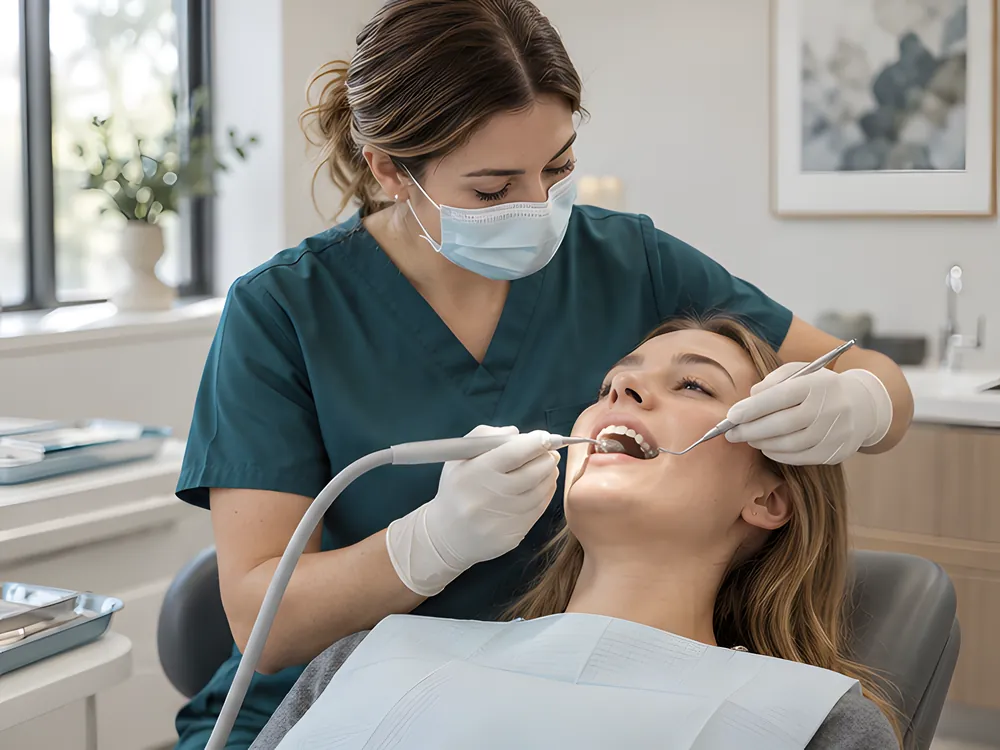
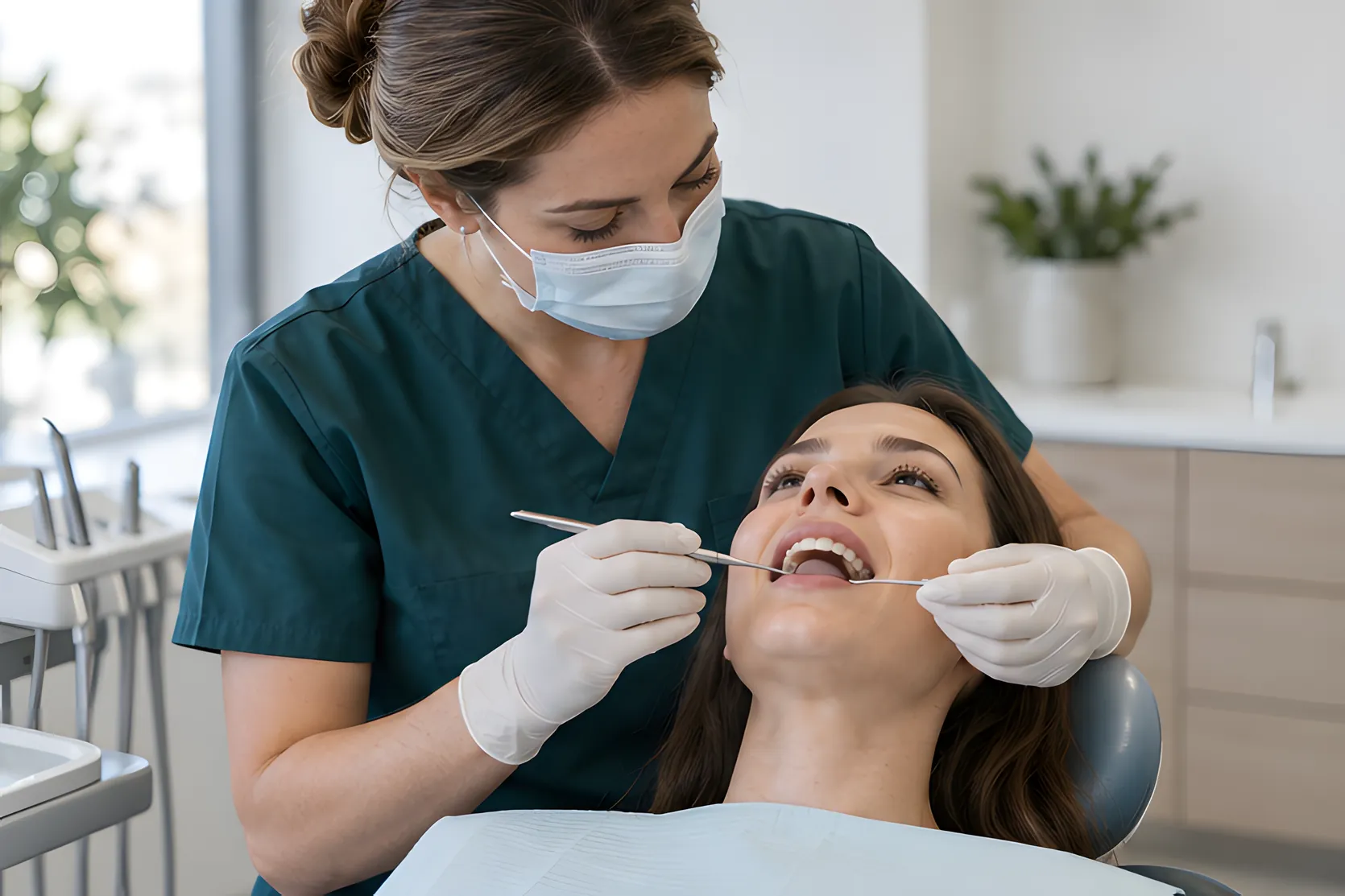
A hygiene appointment is calm and fairly quick. We check your gums, measuring any pockets around the teeth, then remove plaque and tartar above and just below the gumline, polish away surface stains and show you where your brushing is missing. If your gums are sensitive, we can use a numbing gel or a gentler setting. At Aveline, a hygiene clean is part of the standard check-up and cleaning, so you see the dentist and the hygienist in one visit.
If any of these five signs sound familiar, it is worth booking in. Most of what I see can be sorted with one good clean and a few small changes at home.